Wireless & Hybrid EMS
Flexible monitoring with minimal impact on your infrastructure
Wireless and hybrid monitoring systems combine flexibility with reliable monitoring within GMP environments.
Sensors communicate via a wireless network and can, if necessary, be supplemented with wired components for a hybrid setup.
In accordance with GMP, FDA 21 CFR Part 11

When to choose a wireless or hybrid EMS?
When to choose a wireless or hybrid EMS?
Wireless and hybrid EMS systems are ideal when flexibility and minimal installation impact are important.
They are often applied in:
-
Existing installations (retrofit)
Where cabling is difficult or intrusive -
Extensions of existing systems
New measurement points without structural modifications -
Distributed or hard-to-reach locations
Where central cabling is not evident -
Rapid implementations
When monitoring needs to be operational quickly
Architecture of a wireless EMS
A wireless EMS is built around sensors that communicate via an energy-efficient wireless network with one or more gateways within the installation.
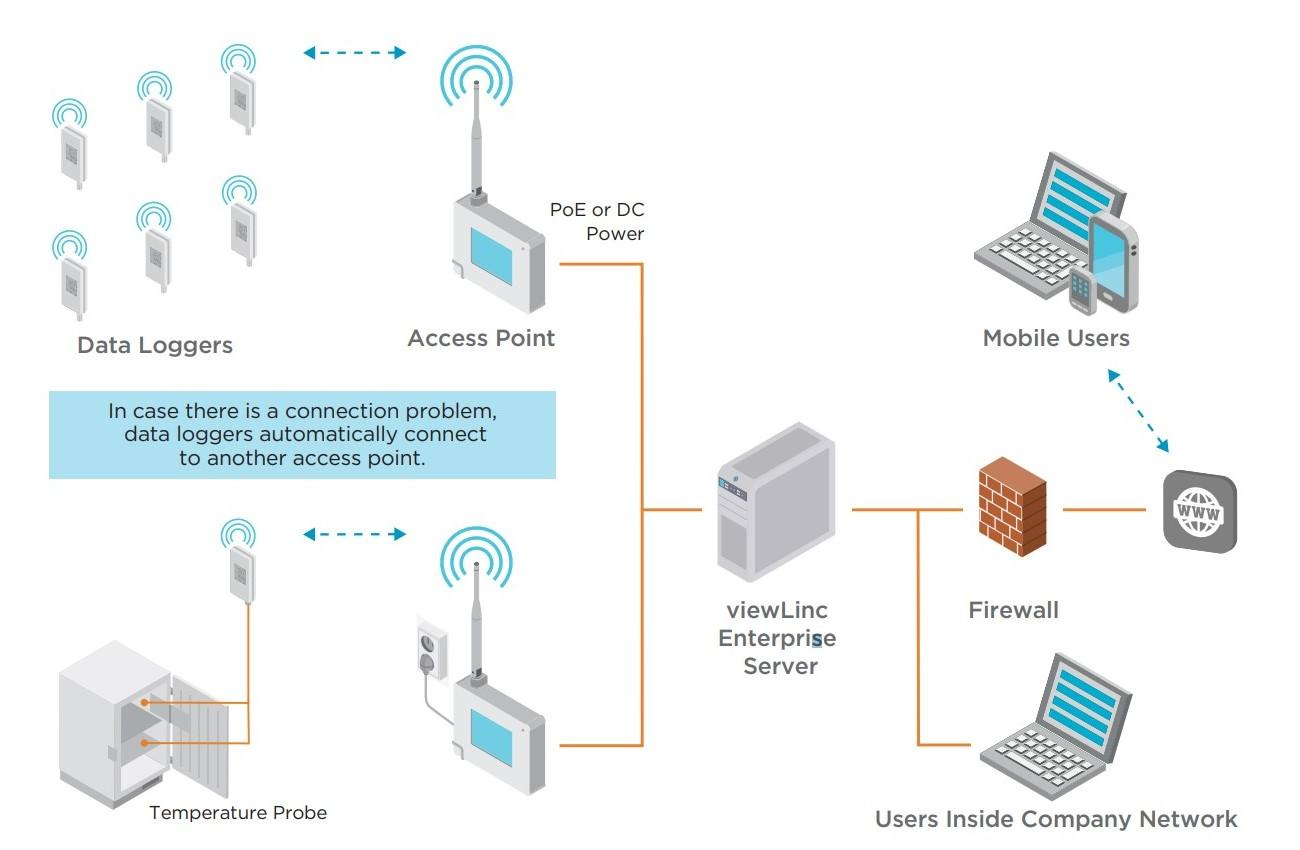
The sensors:
- measure parameters such as temperature, humidity, and pressure
- operate autonomously (on battery)
- have their own memory (data logger)
- communicate periodically with a gateway
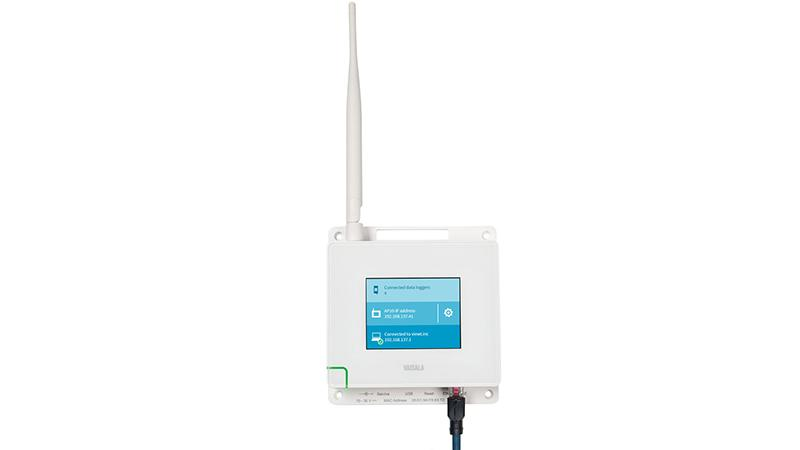
The gateways:
- collect measurement data from multiple sensors
- ensure communication within the network
- send data to a central server or cloud environment
The communication:
Communication occurs via a wireless protocol designed for reliable data transmission over longer distances and through buildings.
This allows sensors to be placed flexibly without complex cabling.
👉 Depending on the size and layout of the site, multiple gateways can be deployed to ensure coverage and reliability.
Flexible setup and easy sensor management
Hybrid setup
In a hybrid configuration, wireless sensors can be combined with wired measurement points.
This offers the possibility to:
- retain existing infrastructure
- execute critical measurement points wired
- combine flexibility and integration
Flexible sensor management and efficient calibration
Wireless sensors function as independent measuring units and are not dependent on a fixed wired measurement chain.
This allows sensors to be easily managed, replaced, or moved without impacting the rest of the system.
Traceability and identification
Each sensor has a unique identification (serial number) and is individually registered within the system.
This makes it possible to:
- Link measurement data to specific sensors
- Track history and usage
- Correctly register calibrations
- Ensure complete traceability

Calibration without system impact
Sensors can be calibrated individually without changes to the installation or wiring.
Typical procedure:
- Sensor is temporarily replaced by a calibrated unit
- Original sensor is calibrated externally
- Monitoring remains active without interruption
👉 This makes calibration more efficient and limits the impact on operational processes.
Smart monitoring, seamlessly integrated
Integration and connectivity
- Wireless communication (long range)
- Network connections (PoE / Wi-Fi / wired)
- Integration via API or OPC
👉 Easy to integrate within existing IT and building systems
Compliance and data management
- Continuous and secure data recording
- Audit trails and GxP support
- User management via central authentication
👉 Supports a controlled and compliant working environment
Flexible alarming
- Email, SMS and telephone notifications
- Visual and acoustic alarms
- Integration with external systems (BMS / relays)
👉 Alarms tailored to criticality and organisation
Real-time monitoring and reporting
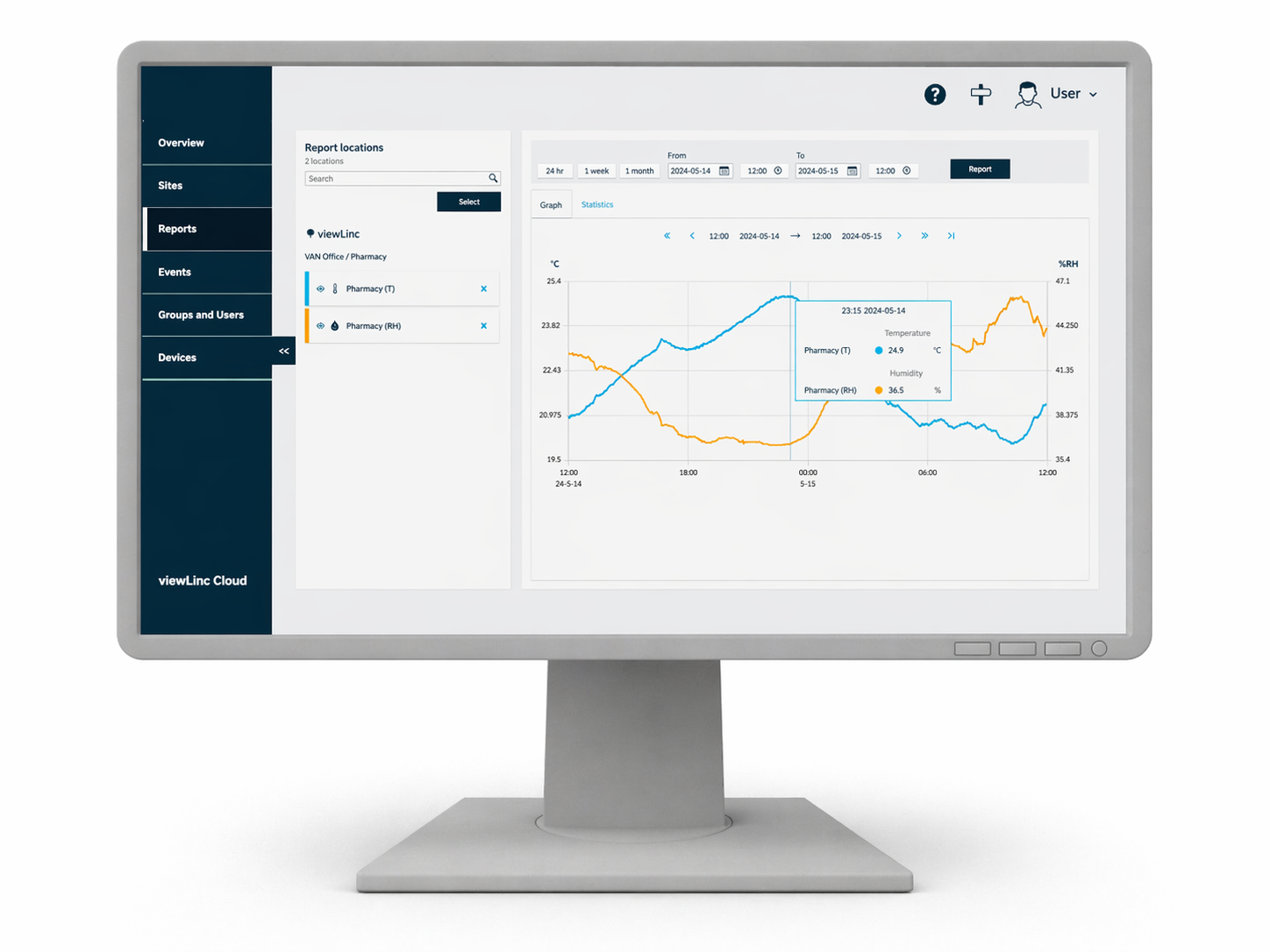
The software environment provides continuous insight into measurement data via:
- Live trending of multiple measurement points
- Historical data analysis
- Automated reporting
Reports can:
- be sent automatically
- be customised to specific needs
- include min/max/average values and annotations