Traditional wired EMS
Reliable monitoring for established and critical environments
Central EMS architecture with wired sensors.
Applied in regulated environments with a classic system structure.
In accordance with GMP, FDA 21 CFR Part 11
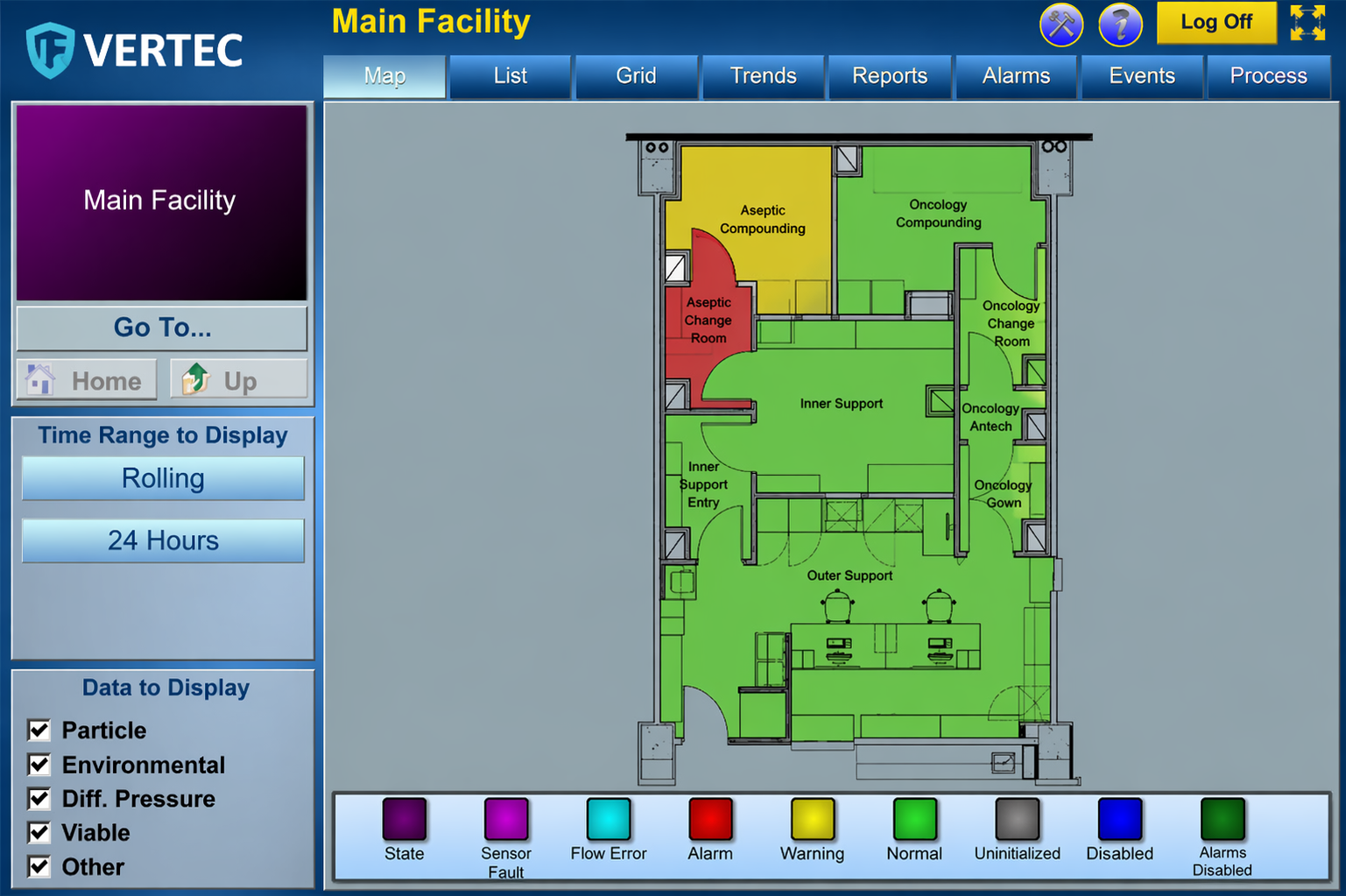
Wired EMS
Environmental Monitoring for critical environments
Central monitoring for critical environments
In pharmaceutical production, cleanrooms, and other regulated environments, continuous monitoring of environmental parameters is essential.
Temperature, relative humidity, pressure, and particle concentration must be continuously monitored to ensure process stability, product quality, and compliance.
An Environmental Monitoring System forms an essential layer within the infrastructure and supports a controlled and documented working environment.
Architecture of a traditional EMS
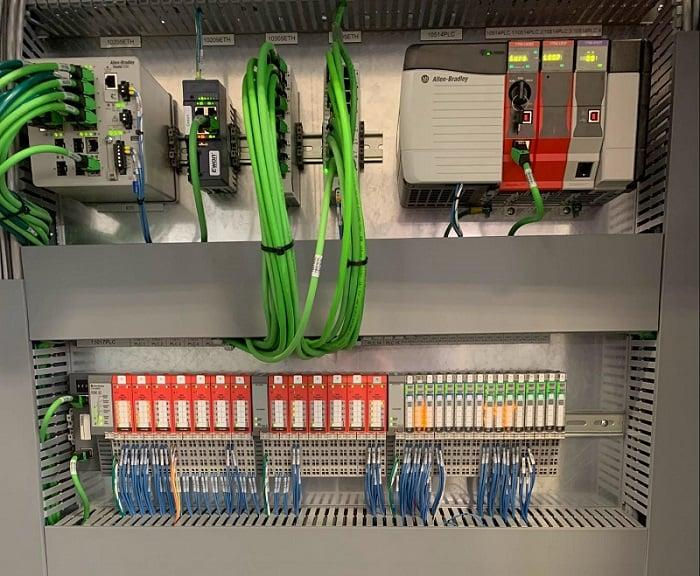
A traditional EMS is built around a centralized architecture where sensors are connected via wiring to a central electrical cabinet.
This cabinet typically contains I/O units or measurement modules that process the signals from the sensors.
These modules:
- register the analogue signals from the sensors
- convert them into digital data
- have no intelligence or data memory themselves
Further processing takes place centrally on a computer or server.
There:
- measurements are stored
- alarms are generated and managed
- data is processed for reporting and auditing
👉 The intelligence and data storage are therefore completely centralised in the system.
Because measurements are based on analogue signals, the cabling is an integral part of the measurement chain.
This means that installation and configuration play an important role in the overall measurement accuracy and validation of the system.
SENSOR MANAGEMENT & CALIBRATION
Management of sensors and measurement points
Within a traditional EMS, sensors are connected via cabling to specific inputs in the central cabinet.
Each sensor is part of a complete measurement circuit, where the sensor, cabling, and signal processing together determine the measurement.
This means:
- Fixed connection between sensor, cabling, and measurement point
- Clear and stable configuration within the installation
- Central configuration and validation of measurement points
- Consistent system architecture according to industrial standards
Calibration within a traditional system
In analogue measurement systems, the entire measurement chain is considered as a whole.
Calibration therefore typically occurs end-to-end, taking into account not only the sensor but also the cabling and signal processing.
1. Calibration on-site or in the lab
Sensors are temporarily removed, calibrated, and reinstalled within the existing measurement system.
After installation, the measurement is checked within the entire chain.
2. Replacement procedure
In critical applications, spare sensors can be used.
- A calibrated sensor is installed.
- The measurement chain is rechecked.
- Monitoring remains active according to the system configuration.
👉 This approach ensures that the entire measurement setup continues to function correctly within the installation.
Central documentation and audit trails
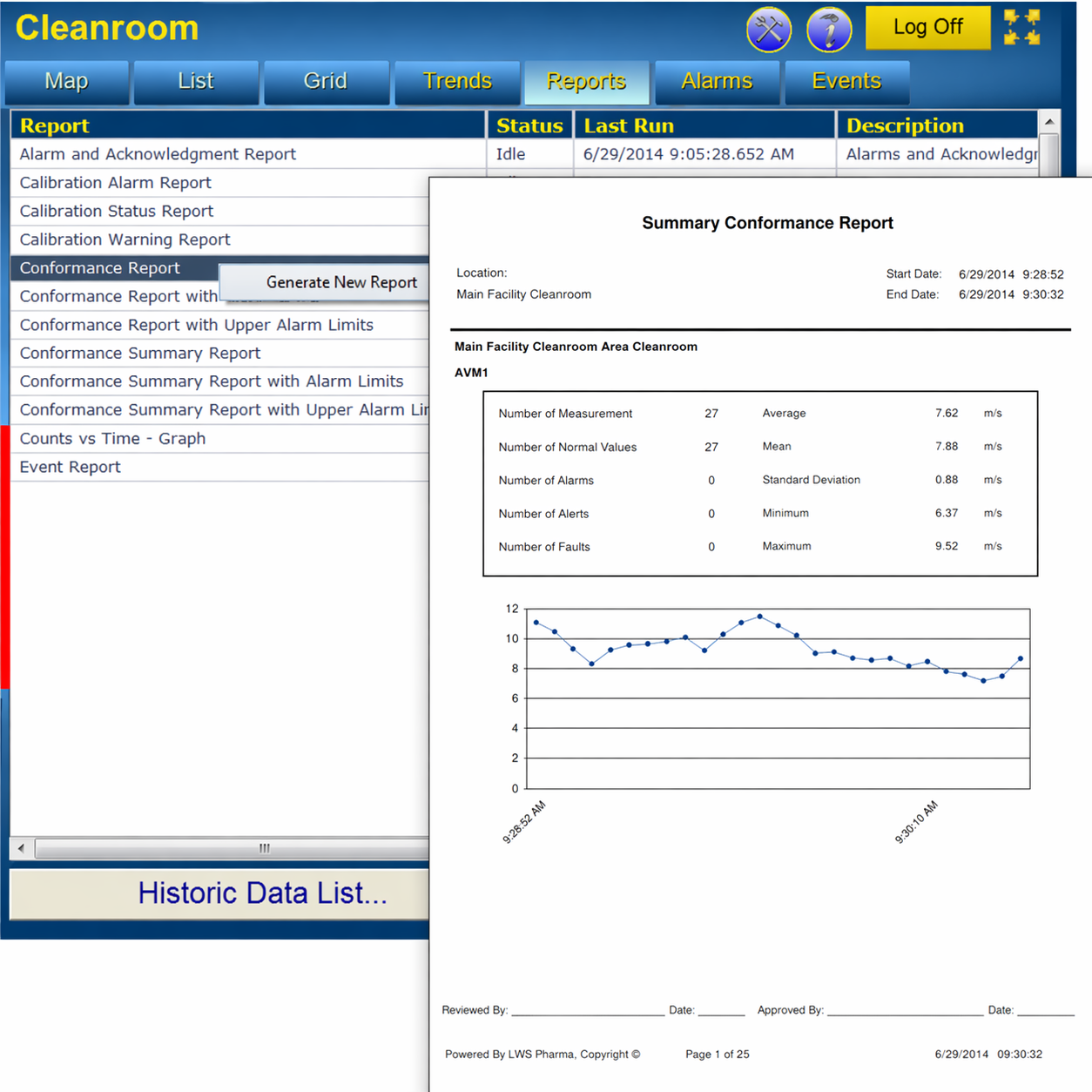
Within a traditional EMS, measurement data, alarms, and system changes are centrally managed and stored.
The central software environment provides:
- Storage of measurement data and history
- Logging of alarms and system events
- Availability of data for reporting and audits
- Traceability within the system configuration
Calibration and associated documentation are typically managed according to applicable procedures and external systems.
👉 The EMS supports monitoring and registration, while document management depends on the organisation and working methods.
Continuous monitoring and alarming
A traditional EMS continuously monitors the critical parameters within the installation.
Deviations are processed centrally and lead to alarms according to set threshold values.
Capabilities include:
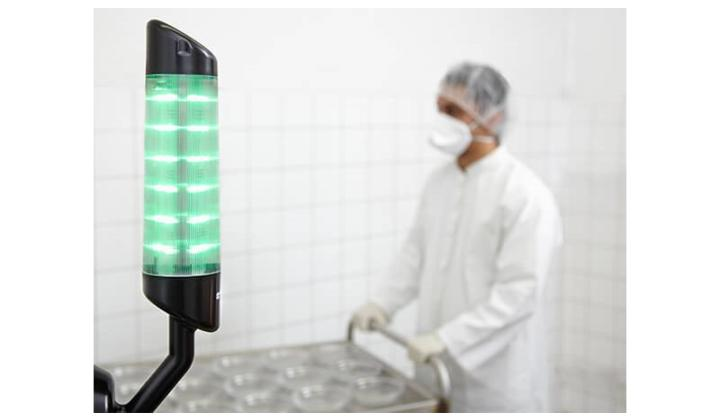
- Visual and acoustic alarms
- Notifications via email or linked systems
The processing of alarms is done centrally within the system on the server.
What is being monitored?
- Cleanroom conditions– Temperature, humidity, CO2, pressure differences, particle counts, …
Alarm according to set procedures
- Visual warnings– LED beacons in different colours for immediate indication.
- Acoustic alarms– Sound notifications for critical deviations.
- Notifications– Immediate warnings for those responsible.
With a traditional EMS, you have a structured and reliable monitoring solution within your installation.